

What Happens When a Microgrid Operates Without EMS

A microgrid can technically operate without an Energy Management System (EMS), but in real-world industrial environments this often leads to instability, inefficiency, and increased operational risk.
Without EMS, energy assets operate in isolation rather than as a coordinated system.
Key Takeaways
- Microgrids without EMS lack coordinated energy control
- Operational risk and downtime increase significantly
- Long-term costs outweigh short-term savings
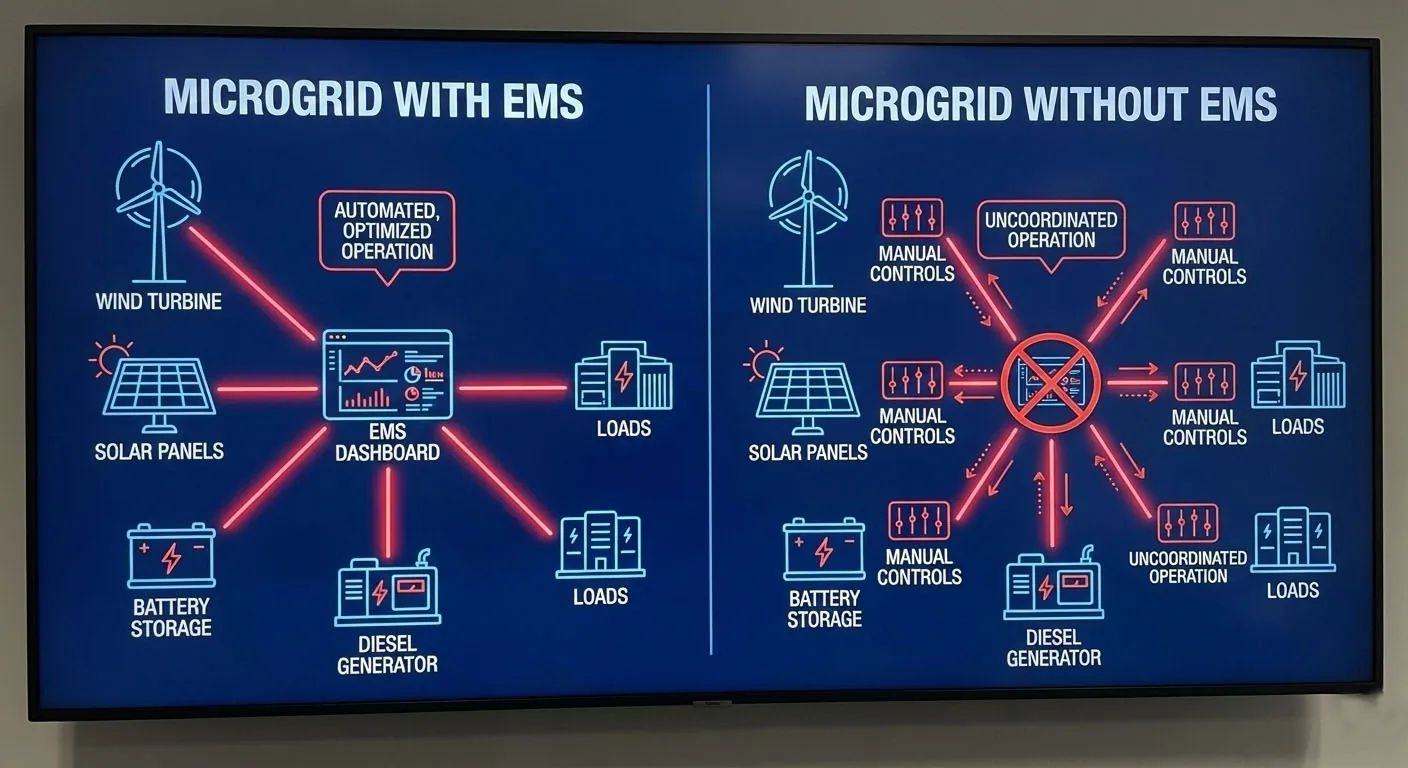

Operational Challenges Without EMS
Without centralized control, generators, batteries, and loads respond independently to changing conditions.
This leads to poor load balancing, inefficient dispatch, and higher fuel or energy consumption.
Impact on Reliability and Costs
Industrial sites operating without EMS often experience more frequent outages, increased maintenance needs, and reduced asset lifespan.
These issues directly impact production continuity and operating budgets.
Frequently Asked Questions
Can a microgrid work without EMS?
Yes, but performance is typically unstable and inefficient, especially under variable load or renewable conditions.
Why do industrial sites need EMS?
EMS ensures coordinated operation, protects assets, and minimizes operational risk.
Is EMS optional for industrial microgrids?
In practice, EMS is essential for stable and cost-effective operation.
In Summary
- EMS is critical for coordinated microgrid operation
- Operating without EMS increases risk and cost
About Weltrus
Provided by Weltrus, specializing in industrial energy storage systems and EMS solutions.


