

How Energy Storage Improves Grid Stability and Efficiency
Introduction
As electricity networks become more complex and renewable energy penetration increases, maintaining grid stability and operational efficiency has become a major challenge. Industrial Energy Storage Systems have emerged as a key solution, enabling grids to respond dynamically to fluctuations in supply and demand.
Energy storage technologies—particularly Battery Energy Storage Systems (BESS)—help stabilize frequency, manage peak loads, and improve overall grid reliability while supporting decarbonization goals.
Why Grid Stability and Efficiency Matter
Grid stability refers to the power system’s ability to maintain consistent voltage and frequency under normal and disturbed operating conditions. Efficiency, on the other hand, measures how effectively electricity is generated, transmitted, and consumed with minimal losses.
Without sufficient flexibility, grids face issues such as frequency deviations, congestion, renewable curtailment, and even large-scale blackouts.
How Energy Storage Stabilizes the Grid
Frequency Regulation and Fast Response
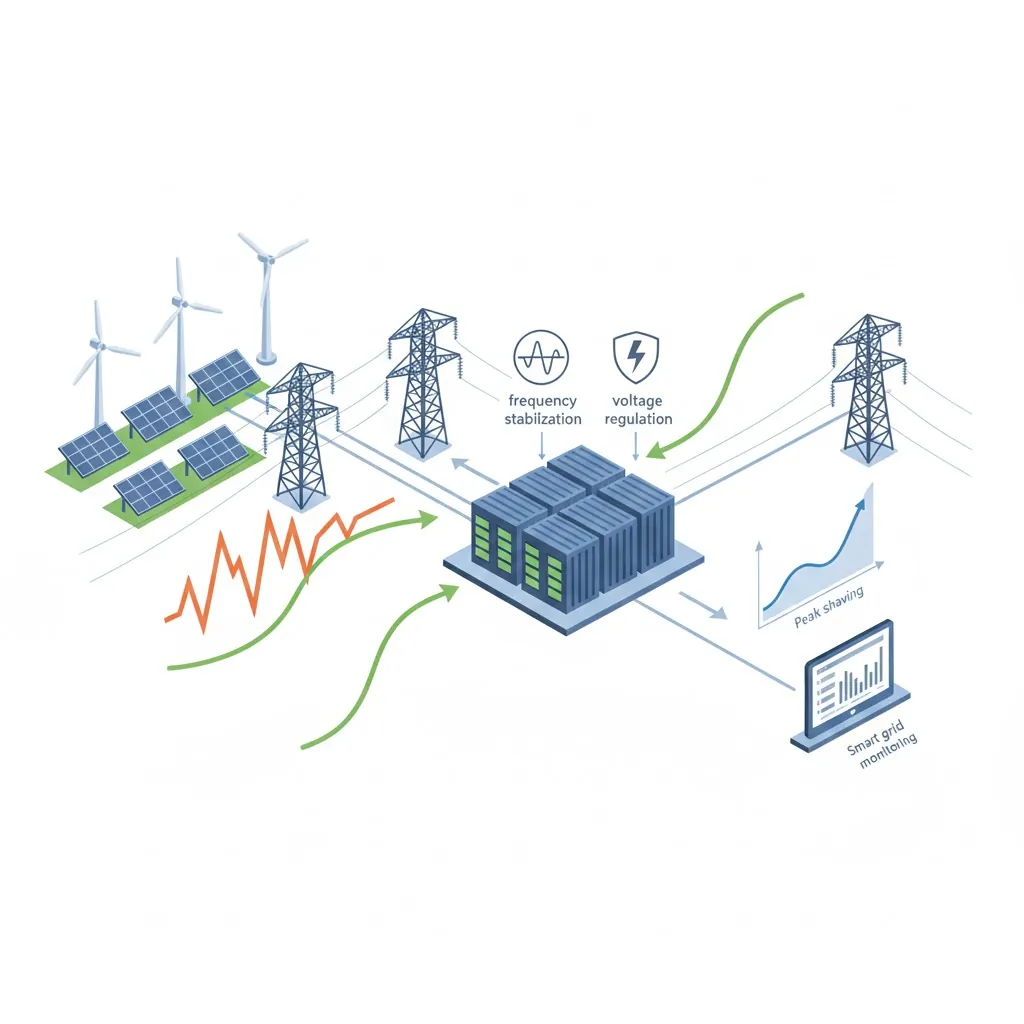
Energy storage systems can inject or absorb power within milliseconds, making them ideal for frequency regulation. Compared to conventional generators, BESS responds faster and more accurately, helping operators maintain grid frequency within strict limits.
Peak Shaving and Load Balancing
By storing electricity during off-peak periods and discharging during peak demand, energy storage reduces stress on transmission infrastructure and power plants. This function improves system efficiency and lowers operational costs for utilities and industrial users.
Voltage Support and Reactive Power Control
Modern storage systems equipped with advanced inverters can provide reactive power support, improving voltage stability in weak or heavily loaded grids.
Supporting Renewable Energy Integration
Renewable energy sources such as solar and wind are inherently intermittent. Energy storage bridges the gap between generation and consumption by storing excess renewable energy and releasing it when production drops.
This capability significantly reduces renewable curtailment and improves the overall utilization of clean energy assets. Learn more in Understanding Battery Energy Storage Systems (BESS) .
Efficiency Improvements Enabled by Energy Storage
- Reduced transmission and distribution losses through localized storage
- Optimized dispatch using intelligent Energy Management Systems (EMS)
- Lower reliance on inefficient peaking power plants
- Improved asset utilization across the entire grid
When combined with AI-driven EMS platforms, energy storage can forecast demand, optimize dispatch strategies, and further enhance grid efficiency. This evolution is explored in The Evolution of Industrial Energy Storage Technologies .
Role of Energy Storage in Smart Grids
Smart grids rely on real-time data, automation, and flexible resources. Energy storage acts as a cornerstone of smart grid architecture, enabling bidirectional power flows, microgrid operation, and resilient energy systems.
As electrification accelerates—driven by EVs, data centers, and industrial electrification— storage will become increasingly essential to maintaining grid performance.
Conclusion
Energy storage systems are no longer optional components of modern power grids. They are essential tools for improving grid stability, enhancing efficiency, and enabling large-scale renewable energy integration.
At Weltrus, we design and deliver advanced industrial energy storage solutions that help utilities, manufacturers, and commercial facilities build resilient, efficient, and future-ready power systems.


